

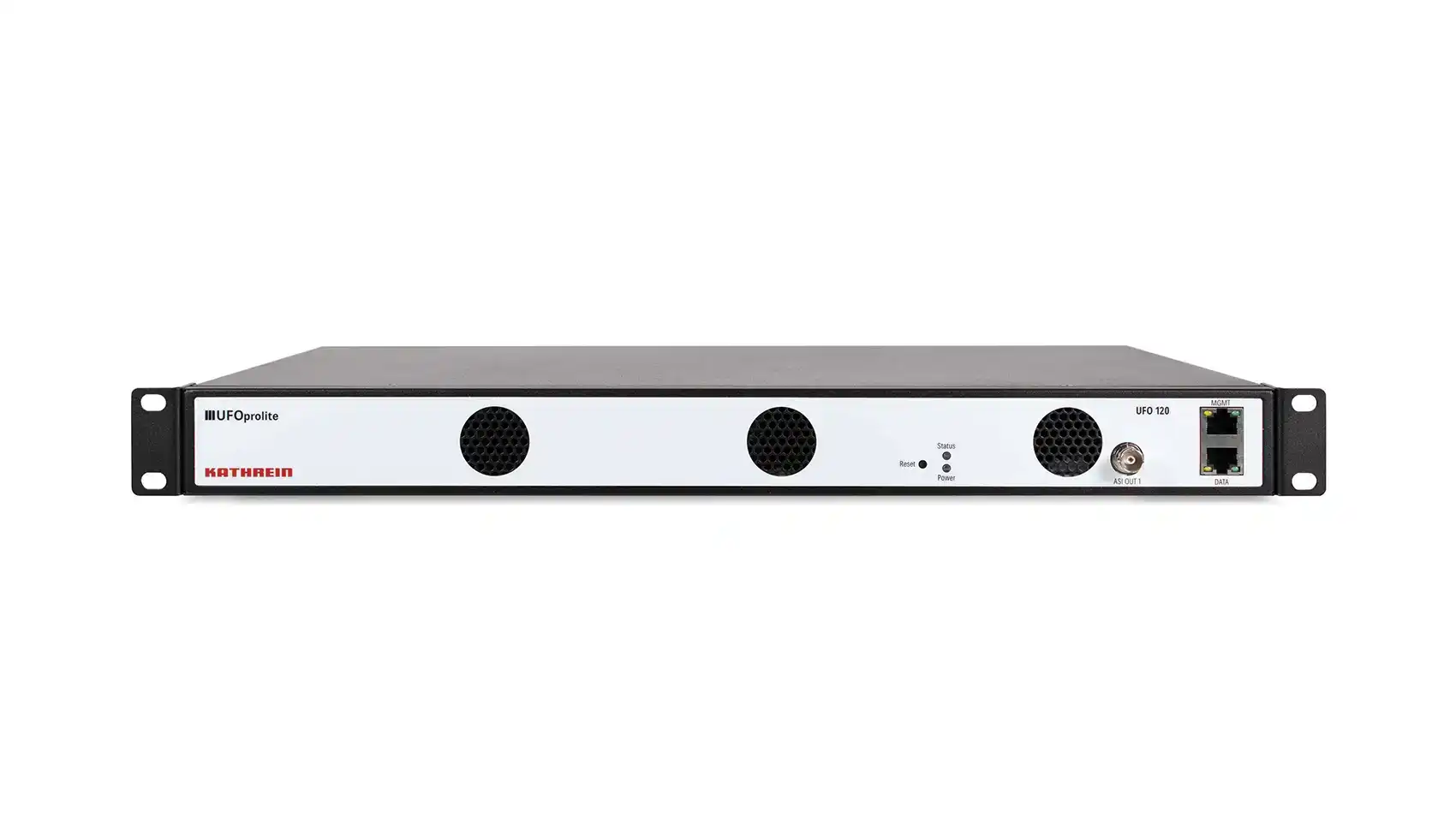

- Kompakter Transmodulator mit über Webinterface wählbarem Ausgang
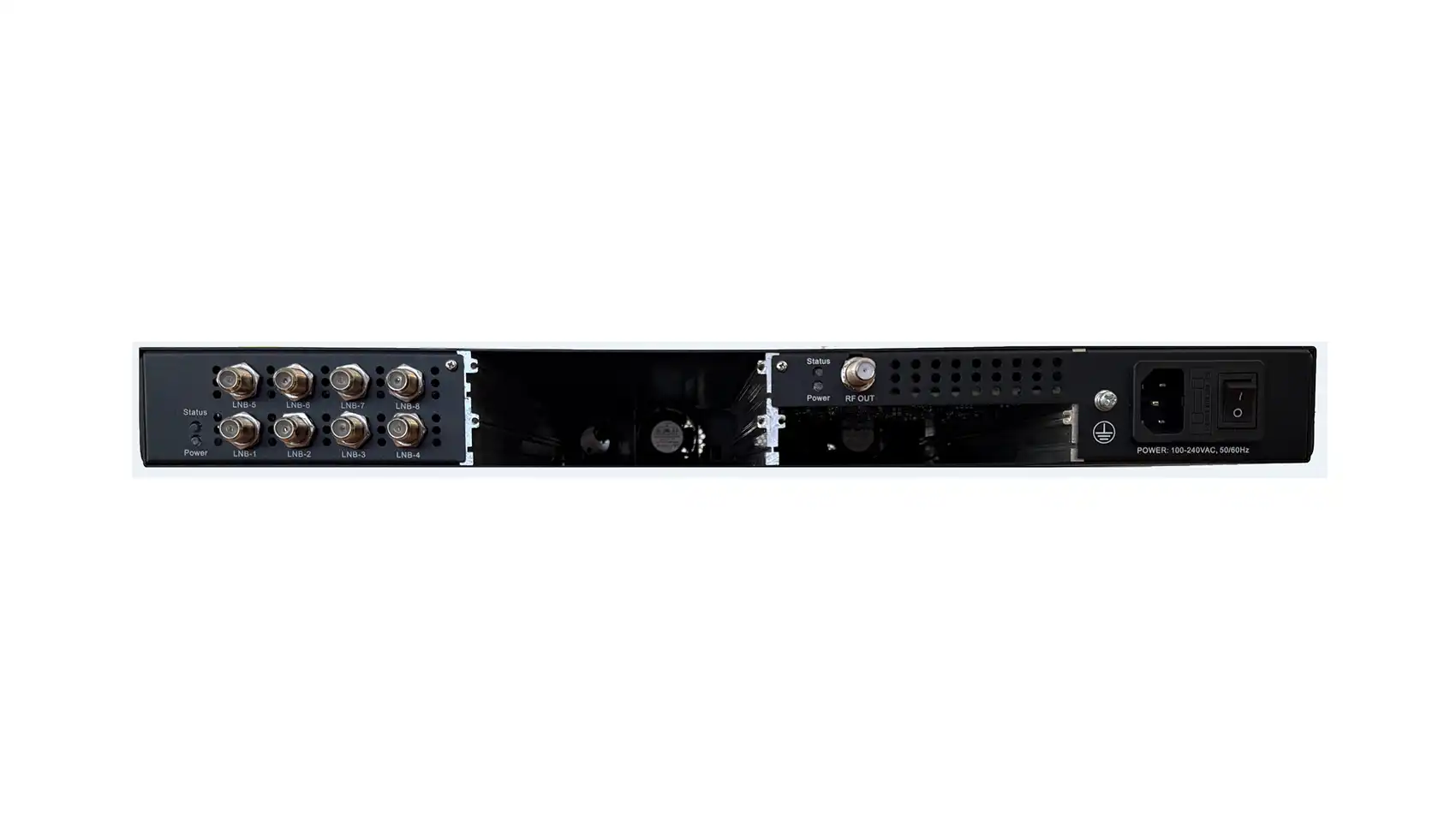
- Eingang: 8 Kanal DVB-S/-S2/-S2X und 2 freie Slots
- Ausgang: 8 Kanal DVB-C oder DVB-T sowie DVB-IP
- Unterstützt DVB-IP mit 120 Eingangs- und 119 Ausgangs-Streams
- Erweiterbar mit UFOpro-Modulen
- Einrichtung über Webinterface
| Typ | UFO 120 |
| Bestell-Nr. | 206500063 |
| Hauptgerät | Festeinstellung |
| Eingabe/Ausgabe | 2 x RJ45 (Gigabit Ethernet) | 1 x Daten (OUT) / 1 x MGMT |
| Protokoll | UDP/RTP |
| IP-Dienste | ARP, Ping |
| Entschlüsselung | 2 x PCMCIA-Steckplatz |
| Transportstrom | 120 x SPTS-Eingang | 119 x SPTS-Ausgang |
| Sat-IF-Eingang | 8 x F-Stecker, 75 Ω |
| Standard DVB-S | EN 300 421 |
| Standard DVB-S2 | EN 302 307-1 V1.4.1 |
| Standard DVB-S2X | EN 302 307-2 V1.1.1 |
| Symbolrate | 1–45 MS/s |
| QAM- oder COFDM-Ausgang | 1 x F-Stecker, 75 Ω |
| Frequenzbereich | 47–862 MHz |
| Ausgangspegel DVB-C | max. 106 dBµV |
| Bandbreite DVB-C | 6 / 7 / 8 MHz |
| Standard DVB-C | ITU-T J.83 Anhang A/B/C |
| Modulations-Standards DVB-C | 6/32/64/128/256 QAM |
| Symbolrate DVB-C | 3,6–6,9 MS/s |
| MER DVB-C | > 40 dB |
| Ausgangspegel max. DVB-T | 105 dBµV |
| Standard DVB-T | ETSI EN 300744 |
| Modulationen Standard DVB-T | 16/64/QPSK QAM |
| Bandbreite DVB-T | 6 / 7 / 8 MHz |
| MER DVB-T | > 42 dB |
| Anzahl der Ausgangskanäle | 8, flexibel konfigurierbar |
| System einrichten | Webschnittstelle |
| Leistungsaufnahme max. | 170 W |
| Eingangsspannung | 100–240 V/AC |
| Betriebstemperatur | 0 bis +50 °C |
| Luftfeuchtigkeit im Betrieb | < 95 % |
| Gewicht | 4,16 kg |
| Abmessungen (B x H x T) | 482,6 x 44,5 x 435 mm | 1 RU |